
In a world where stubborn fat, declining energy, and metabolic slowdown plague millions, 5-Amino-1MQ stands out as a promising research compound gaining traction in longevity and wellness circles. This small molecule, often marketed under the peptide umbrella, targets a key enzyme linked to fat storage and cellular aging.
Backed by preclinical studies showing dramatic improvements in body composition and energy metabolism without altering food intake, 5-Amino-1MQ offers a novel approach for those seeking metabolic support beyond traditional diet and exercise.
Whether you’re exploring it for weight management, enhanced vitality, or anti-aging benefits, this guide breaks down everything you need to know.
From its mechanism to real-world usage, discover why 5-Amino-1MQ is buzzing in biohacking and clinical longevity programs.
Regulatory Note (Canada):
In Canada, 5-Amino-1MQ is not approved by Health Canada for general therapeutic use. It is typically available only through specialised clinics or for research purposes and should only be used under the guidance of a licensed Canadian healthcare provider.
What is 5-Amino-1MQ?
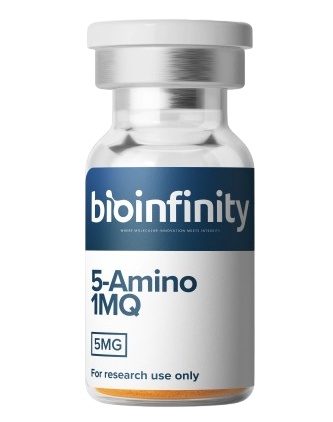
5-Amino-1MQ, chemically known as 5-amino-1-methylquinolinium, is a synthetic small-molecule inhibitor designed to modulate metabolic pathways. Despite being referred to as a “peptide” in many wellness contexts for marketing simplicity, it is technically a membrane-permeable quinolinium compound, not a traditional peptide chain.
Researchers first identified its potential in 2017 at the University of Texas Medical Branch while screening for selective inhibitors of nicotinamide N-methyltransferase (NNMT).
NNMT is an enzyme overexpressed in obese and aging tissues, particularly white adipose tissue. It plays a role in converting nicotinamide (a NAD+ breakdown product) into 1-methylnicotinamide, effectively “leaking” resources that could otherwise support energy production.
5-Amino-1MQ blocks this enzyme with high selectivity and cell permeability, making it orally bioavailable in humans (unlike in some rodent models where injections were used).
Available primarily as oral capsules through specialised compounding pharmacies or longevity clinics, 5-Amino-1MQ is not a hormone, steroid, or stimulant. It influences natural cellular processes to promote fat oxidation, NAD+ preservation, and mitochondrial efficiency.
Early animal data highlight its ability to shrink fat cells and improve overall metabolic function, positioning it as a tool for body recomposition and healthy aging.
How Does 5-Amino-1MQ Work?
At its core, 5-Amino-1MQ works by potently inhibiting NNMT. This enzyme normally accelerates fat cell expansion (adipogenesis) and depletes NAD+ levels by methylating nicotinamide, diverting it from the salvage pathway that recycles it into NAD+. NAD+ is the master regulator of cellular energy, mitochondrial function, and sirtuin activation (including the “longevity gene” SIRT1).
By blocking NNMT, 5-Amino-1MQ achieves several downstream effects:
- Boosts NAD+ availability: Studies in adipocytes show 1.2- to 1.6-fold increases in intracellular NAD+ at micromolar concentrations, enhancing ATP production and metabolic rate.
- Reduces fat storage: NNMT inhibition shrinks adipocyte size, lowers white adipose tissue mass, and promotes the browning of fat for greater calorie burn via thermogenesis.
- Improves energy expenditure: Treated cells and animals exhibit higher mitochondrial output without changes in appetite or food intake, which is key for sustainable fat loss.
- Supports insulin sensitivity and lipid profiles: Preclinical models report reduced plasma cholesterol and better glucose clearance.
In diet-induced obese (DIO) mice, systemic administration (equivalent to ~34 mg/kg/day) over just 11 days led to significant body weight reduction, smaller fat pads, and improved cholesterol levels. These effects occurred through modulated NAD+ salvage and SAM (S-adenosylmethionine) pathways, without toxicity.
Unlike broad-spectrum supplements, 5-Amino-1MQ targets a specific metabolic “brake.” As we age or gain weight, NNMT rises, slowing metabolism and accelerating NAD+ decline (levels can drop 50% by middle age). 5-Amino-1MQ helps release that brake, allowing your body’s own systems to function more efficiently.
Uses & Benefits of 5-Amino-1MQ
5-Amino-1MQ shines in metabolic support and longevity programs. While 5-Amino-1MQ works by targeting cellular metabolism directly, other approaches like the CJC-1295 and Ipamorelin peptide stack support fat loss and recovery through growth hormone optimization.
Key benefits, drawn from preclinical research and clinical observations, include:
- Fat Loss and Body Recomposition: It promotes fat metabolism while preserving lean muscle. DIO mice lost ~7% body weight and showed reduced adipocyte size in short-term studies. Users often report easier stubborn fat reduction (e.g., abdominal or visceral) when paired with diet and exercise.
- Enhanced Energy and Mitochondrial Function: By elevating NAD+, it combats fatigue, supports daytime alertness, and improves recovery. Many describe steadier energy without crashes.
- Metabolic Health Optimization: Potential improvements in insulin sensitivity, blood sugar control, and lipid profiles make it appealing for prediabetes or metabolic syndrome support.
- Longevity and Anti-Aging: NAD+ preservation activates sirtuins, aiding cellular repair, inflammation control, and tissue resilience. Emerging data suggest benefits for muscle strength in aged models and broader age-related decline.
- Cognitive and Recovery Support: Indirect NAD+ boosts may enhance mental clarity and sleep quality by reducing metabolic-related energy dips.
Clinics like Iowa IV highlight its role in longevity programs: increased fat burning, healthier body composition, and cellular repair when combined with nutrition and movement. Results typically build over weeks, with early energy gains in 1-2 weeks, noticeable composition changes by 3-6 weeks, and sustained benefits beyond 12 weeks with consistent use.
It pairs well with NAD+ therapies (e.g., IV or precursors like NMN), as 5-Amino-1MQ prevents wasteful NAD+ consumption while replenishment restores supply.
For those comparing options, several peptides for weight loss target fat metabolism through different mechanisms, making it helpful to understand how 5-Amino-1MQ stacks up against more traditional peptide-based approaches.
Is 5-Amino-1MQ Safe?
Preclinical evidence indicates a favorable safety profile. In mouse studies, effective doses caused no observable adverse effects, changes in food intake, or toxicity, even at higher escalations. It does not disrupt hormones and works via natural pathways.
Reported side effects are generally mild and transient:
- Mild nausea or stomach discomfort (especially initially)
- Temporary headaches
- Increased thirst or dry mouth
- Mild fatigue during metabolic adjustment
These often resolve as the body adapts. It is not recommended during pregnancy, breastfeeding, or without medical supervision. Always disclose full medical history and medications to your provider.
Importantly, 5-Amino-1MQ is not approved by Health Canada for any medical use in Canada. It remains a research compound with no published large-scale human clinical trials to date. Safety data come from animal models and anecdotal clinical experience in wellness settings. Quality varies by source, so obtain it only from reputable compounding pharmacies under physician oversight. Long-term human data are still emerging.
How Is 5-Amino-1MQ Used? (Dosage and Administration)
5-Amino-1MQ from Pantheon Peptides is supplied as a 5mg lyophilised vial intended for research purposes. Unlike oral capsule versions available through some clinics, this formulation is designed for subcutaneous (subQ) injection after proper reconstitution. This delivery method offers high bioavailability and is the preferred route in many research protocols.
Reconstitution Instructions:
- Use bacteriostatic water (BAC water) to reconstitute the vial.
- A common approach is to add 1–2 mL of bacteriostatic water depending on desired concentration (e.g., 2 mL yields approximately 2.5 mg/mL).
- Gently swirl (do not shake vigorously) until the powder fully dissolves.
- Store the reconstituted solution in the refrigerator and use within the recommended stability window (typically 14–28 days).
Typical Research Dosage:
- Starting dose: 2.5–5 mg per day via subcutaneous injection
- Common range: 2.5–10 mg daily, often split into 1–2 injections (e.g., morning and/or evening)
- Max dose: Some protocols use up to 10–15 mg/day based on body weight and research goals, though lower doses are frequently sufficient
Injections are typically administered subcutaneously in areas with adequate fat tissue, such as the abdomen or thigh, using an insulin syringe for comfort and precision. Many researchers dose once daily in the morning for convenience and sustained metabolic effects throughout the day.
Cycle Recommendations:
- Cycles generally run 4–12 weeks, followed by a break of 2–4 weeks to assess results and maintain sensitivity.
- A single 5mg vial provides multiple doses depending on the chosen amount per injection (e.g., at 5 mg/day, one vial lasts roughly 1 day; users often order multiple vials for a full cycle).
For best results in metabolic research, combine with a calorie-controlled diet, resistance training, and adequate hydration. Always follow sterile injection practices, rotate injection sites, and monitor for any individual response.
Client Reviews
Stubborn Fat & Steady Energy Boost
5-Amino-1MQ has been fantastic for targeting my stubborn belly fat while keeping my energy steady all day. I’m seeing better body composition without feeling drained, and my workouts feel more effective. It’s a simple daily dose that supports metabolism naturally. I finally feel like my body is working with me instead of against me!

Metabolism Reset & Vibrant Energy
After noticing my metabolism slowing down in my 40s, 5-Amino-1MQ helped me drop a few stubborn pounds and regain that vibrant energy I missed. No crashes, just consistent fat burning and better daily alertness. It pairs perfectly with my routine and has me feeling lighter, stronger, and more motivated overall. The only downside I noted was some nights it would be hard to fall asleep.

Winter Fat Loss & Muscle Support
Living through another long Canadian winter, 5-Amino-1MQ made a real difference in shifting stubborn fat and preserving my muscle tone. My energy levels stayed high despite the short days, and I feel more resilient and youthful. The easy capsules delivered noticeable body recomposition, exactly what I needed for lasting results!

Frequently Asked Questions
What are the side effects of 5-Amino-1MQ?
Side effects are typically mild and short-lived: nausea, headache, thirst, or initial fatigue. No serious adverse events were noted in preclinical dosing. Discontinue and consult your provider if symptoms persist.
Is 5-Amino-1MQ the same as NAD+?
No. NAD+ is a vital coenzyme for energy and repair. 5-Amino-1MQ is an NNMT inhibitor that helps preserve and elevate your body’s existing NAD+ by preventing its wasteful breakdown. It complements NAD+ therapies (IV, NMN, NR) rather than replacing them.
How long does 5-Amino-1MQ take to work?
Effects vary by individual, diet, and lifestyle. Many notice improved energy and appetite regulation in 1–2 weeks. Visible body composition changes (fat loss, better metabolism) often appear in 3–6 weeks. Sustained benefits build over 6–12+ weeks with consistent use.
Is 5-Amino-1MQ worth it?
For those struggling with metabolic resistance, age-related fat gain, or low energy despite efforts, it may be a valuable adjunct. Preclinical data are compelling, and early user/clinic reports show promise for fat loss without muscle sacrifice. However, it’s not a magic pill, and the results are amplified with healthy habits. Weigh cost, lack of long-term human trials, and consult a provider to determine personal value.
Can I buy 5-Amino-1MQ online?
Yes. While 5-Amino-1MQ is available online, product quality can vary significantly between suppliers.
Conclusion
5-Amino-1MQ represents an exciting frontier in metabolic science: a targeted NNMT inhibitor that supports fat metabolism, NAD+ optimization, and cellular vitality. When incorporated into a structured peptide therapy protocol, compounds like 5-Amino-1MQ can complement other treatments aimed at improving metabolism, energy production, and long-term health.
From shrinking fat cells and boosting energy in animal models to real-world applications in longevity clinics, it offers a science-backed option for those pursuing better body composition and healthier aging.
Some advanced protocols also incorporate multi-peptide formulations like the Klow peptide blend to support inflammation control and recovery alongside metabolic optimization.
While promising, it is still investigational, and not a substitute for lifestyle fundamentals or approved medical treatments in Canada. As research advances, 5-Amino-1MQ could become a cornerstone of next-generation metabolic therapies.